YUMI (Your Universal Multiboot Installer), is a Multiboot Live USB bootable Windows media creation tool or MultiBoot ISOs utility. This software can also be used to create a USB Installer for Windows or Linux. It helps automate the process of building custom Live bootable Linux USB sticks containing multiple ISO files of your choosing.
YUMI Multiboot ISO Bootable USB Creator
What is YUMI?
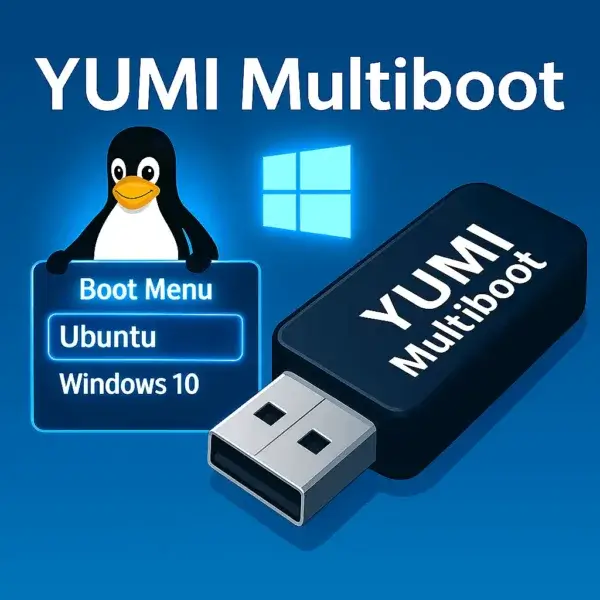
Derived from its predecessor the Universal USB Installer (UUI), the YUMI Multiboot maker or "USB bootable media creator tool" is a free and open source software utility that allows users to create and then boot from a USB flash drive or memory stick consisting of multiple operating systems and tools. You can use it to store, boot, and run a variety of Linux and Windows operating systems, antivirus utilities, disk utilities, and other tools from one removable device. Whereas some tools like RUFUS can only be used to USB boot one distribution or tool from the flash memory device at a time.
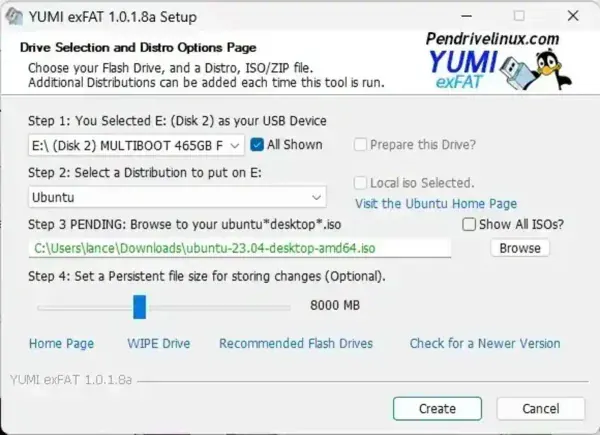
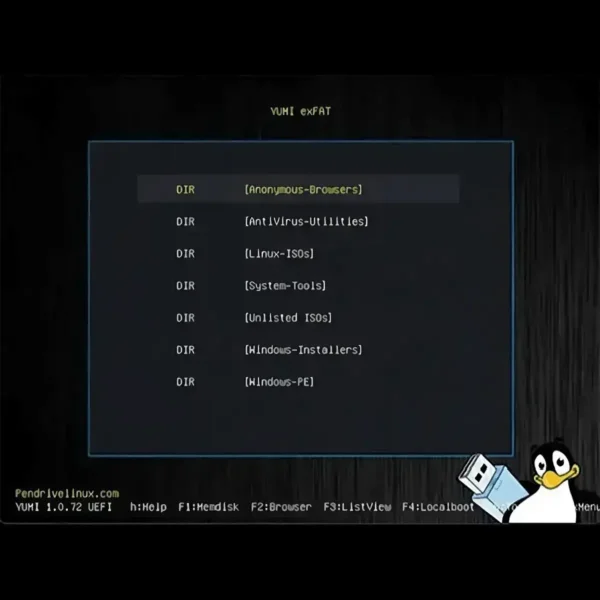
This popular MultiOS USB boot tool can help you quickly and easily make a flash drive boot from USB. Below the utility is shown loading the startup Boot Menu from USB:
Features of this Multiboot USB Bootable Software
- Website links provided so users can discover and learn more about each USB bootable distribution or system tool.
- Download links make it easy to find and fetch ISO files to put on your bootable USB.
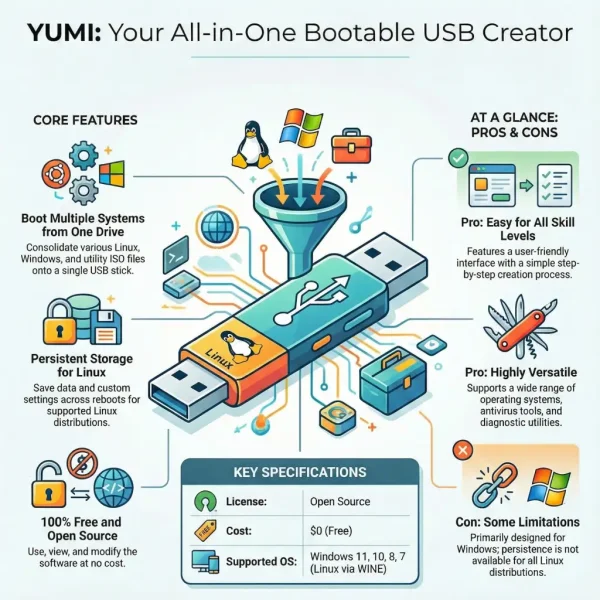
- Includes a Persistence file creation feature for Arch, Fedora, Debian, or Ubuntu-based distributions. Each added distribution can have its own persistent storage, making it ideal for storing multiple Linux versions or for allowing multi-user persistence.
- Ability to boot and Run Windows from USB. Can be used as a traditional Windows Media Creation Tool for installing OS software as well.
- Ability to view/remove installed items, making it easy to clean up and reorganize your drive.
- exFAT variant supports the ability to "Drag and Drop ISO files" directly onto the flash memory stick.
- Advanced YUMI Py toolsets feature full USB drive cloning, complete compressed image backup/restore, and direct testing utilizing VirtualBox or QEMU.
- YUMI Py's LAN Share feature streams any installed ISO to a browser on another device on your network - live, with persistence, or as an already installed VM - kinda like DistroSea's browser based previews, but running privately on your own network with your own persistence and installed VMs, not a shared public queue.
- A format option is available on some variants to assist in the format/reformat of drives. Legacy versions use a Fat32 formatter on even 32GB+ large USB drives.
- 100% Free and Open Source (source code is provided for each version upon release).
Why YUMI Py Sets the Standard
LAN Share Network Boot: It streams any installed ISO over your local area network (LAN) directly into a browser on another device.
Byte Level Cloning and Backup: It supports full backup, restore, and cloning of your ootable USB drive configuration to other hardware.
Virtual Machine Testing: Includes built in QEMU and VirtualBox testing so you can boot and test your drive straight from your desktop without rebooting.
Automatic ISO Downloading: Includes built in option to automatically download select ISO file for you and saves them right on the drive.
Batch ISO Installs: Includes built in option to add multiple ISO files at once to your USB drive.
Windows VHD/VHDX Support: Allows you to boot Windows directly from virtual hard drive images (like a modern Windows to Go for Windows 11).
YUMI Boot from USB Specs and Rating
- Project Page: Multiboot USB Bootable Media Creation Tool
- Variants: YUMI Variants (exFAT, YUMI Py, UEFI, Legacy)
- Developer: Pen Drive Linux
- Release Date: First released March 13, 2011
- File Size: 1 MB - 16 MB depending on variant or version.
- License: Open Source
- Supported Operating Systems: Microsoft Windows 11, 10, 8, 7, and Native Linux/cross-platform support (via YUMI Py version)
- Price Currency: USD
- Price: $0 Free
- Application Category: UtilitiesApplication, Bootable USB Software
- Editor's Rating: (5 Star) ★★★★★
Pros:
- Ease of Use: YUMI has a super friendly graphical user interface, making it accessible for users of all experience levels. The simple YUMI boot process simplifies creating multiboot USB drives.
- Versatility: Easy to use for beginners. The bootable USB software supports a wide range of operating systems and utilities, including Linux distributions, Windows, antivirus tools, and system diagnostics utilities.
- Persistence Storage: Allows the creation of persistent storage for some Linux distributions, enabling users to save data and settings across reboots.
- Open Source: Open-source, allowing users to use and modify it without cost.
- BIOS and UEFI Compatibility: Compatible with both BIOS and UEFI firmware, providing broad support for different hardware configurations.
- Advanced USB Diagnostics (YUMI Py): Built-in capabilities to safely clone entire flash drives, create compressed drive backups, and simulate boots using built-in VirtualBox or QEMU integration.
- Network Boot Sharing (YUMI Py): The LAN Share feature lets other devices on your network boot ISOs already on the drive straight from a browser, with no software install and no need to reboot the host PC.
Cons:
- Limited Persistence Support: Not all Linux distributions supported by YUMI can use persistent storage. This feature is available only for select distributions.
- macOS Limitations: While YUMI Py introduces native cross platform support for Linux and Windows, it remains primarily focused away from macOS hardware environments.
Downloading YUMI
This tool is offered by Pen Drive Linux in Legacy, BIOS, UEFI, exFAT, and cross-platform YUMI Py variants. See below:
Important Note: All variants with the exception of the current exFAT and Python releases have been archived and are no longer being actively updated or supported. As such, some of the most recent Linux distributions (that are over 4GB in size) will no longer work if using the older programs. For the best ISO compatibility and access to modern tools, it is highly recommended to only use the latest exFAT or Py releases going forward.
You can learn more about and download the Legacy (BIOS only Boot) FAT version here;
Multiboot ISO USB Media Creator - YUMI Legacy FAT Download
The UEFI (BIOS and UEFI Boot) version is made available here;
YUMI UEFI Download
Or the recommended latest exFAT release here;
YUMI exFAT Download
Or the advanced, cross-platform Python variant here;
YUMI Py Download
How to Create a Bootable USB drive using YUMI
To create a Multiboot USB drive that enables you to boot multiple operating systems from one device, follow these steps:
- Insert your USB flash drive into an available port on your computer. Make sure you back up any existing files, as formatting will erase the contents.
- Launch the YUMI software executable that you downloaded above.
- Select your USB drive from the drop-down dropdown list. You can optionally check the box to format the drive to exFAT if starting fresh.
- Choose a distribution/tool from the provided list that matches the ISO file you wish to add. If you do not have the image yet, use the provided download link to fetch it.
- Browse to your ISO file on your computer and select it.
- Click "Create" to begin compiling your multiboot media. Once complete, you can click "Yes" on the prompt to continue adding additional ISOs, or click "No" to finalize the drive.
Final Thoughts
YUMI remains one of the easiest ways to turn a single flash drive into a portable toolkit of operating systems, installers, and recovery utilities, without re-flashing it every time you need something different. For most users, YUMI Py is the version to grab - it runs natively on both Windows and Linux, and now includes drive cloning, VirtualBox/QEMU test booting, and LAN Share for streaming installed ISOs to other devices on your network, on top of the classic multiboot and persistence features that made this Multiboot flash tool popular in the first place. If you just want a simple, no frills Windows tool, the exFAT variant is still there and fully supported. Either way, it's hard to beat free and open source software that keeps getting new capabilities years after its original release.