balenaEtcher is a free, open-source utility for writing operating-system images to USB drives and SD cards. For help with USB cloning, use a dedicated cloning utility instead. Check the official documentation for supported image types and current system requirements before writing.
The resulting USB drive can boot only if the selected image is designed for USB booting and is compatible with the computer's firmware. Etcher is commonly used for Linux live media, Raspberry Pi images, recovery environments, and other supported disk images. It does not turn every ISO into a bootable installer.
Use balenaEtcher to Flash OS Images to USB
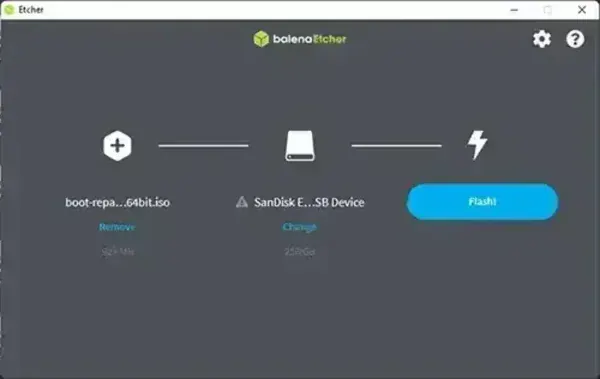

Balena Etcher is an open source disk imaging tool designed to make the process of creating bootable USB drives or SD cards as simple and error free as possible. It is well known for its clean interface and cross platform support, working on Windows, macOS, and Linux.
Etcher focuses on writing disk images byte-for-byte. It includes safeguards against selecting internal drives and verifies the written data. Etcher does not transform Windows installation ISOs into bootable USB media, and it does not provide persistent storage for live Linux sessions. For Windows installers, choose a purpose-built tool such as Rufus; for multiboot setups, consider Ventoy. Always check the image source and selected target drive before writing, because flashing overwrites data on the destination device.
Key Features
- Open Source: Fully open source, allowing transparency, auditing, and community contributions.
- Multi Device Flashing: Can flash multiple USB drives or SD cards simultaneously, saving time.
- Write Validation: Automatically verifies written images to ensure data integrity.
- Visual Interface: Clean, modern UI that clearly shows progress and target devices.
- Fast and Efficient: Optimized for speed when writing disk images.
- Built in Safety Features: Helps prevent accidental overwrites of system drives.
- Well Known ISO to USB Tool: Widely used for operating system installers, live environments, and recovery tools.
Etcher writes compatible image files to a selected USB drive or SD card and verifies the result. Not every ISO is designed to boot when written directly, and Windows installation images may require a tool that prepares the media specifically for Windows. Etcher also does not clone one physical USB drive to another; use a dedicated drive-imaging tool for that task. Before flashing, back up the destination device because its existing contents can be overwritten.

Alternative ISO to USB Tool: Win32 Disk Imager
If you like Etcher, you may also want to check out Win32 Disk Imager, a simpler image writing utility commonly used for embedded systems and raw disk images.
Comparison Chart:
| Feature | Etcher | Win32 Disk Imager |
|---|---|---|
| Installation Required | Yes | Yes |
| Write Verification | Yes | Yes |
| Compressed Image Support | No | No |
| Multi Device Flashing | Yes | No |
| System Drive Protection | Yes | No |
| File Size | Varies by installer and platform | Varies by release and package |
Frequently Asked Questions (FAQs)
What is Balena Etcher used for?
It is a free, open-source tool for writing compatible operating-system images to USB drives and SD cards. It is commonly used for Linux live media, Raspberry Pi images, and other disk images; it is not a USB-to-USB cloning utility and does not prepare Windows installation ISOs automatically.
Does it work on all operating systems?
The current documentation lists Windows 10 or later, macOS 10.13 or later, and most Linux distributions on Intel 64-bit systems. Check the official documentation for current requirements and available installers.
Is this tool free to use?
Yes, it is completely free and open source software.
Can I use it to clone USB drives?
No. Etcher writes an image file to a target drive; it does not copy one physical USB drive directly to another. Use a dedicated disk-imaging or cloning utility for drive-to-drive copies.
Why did my USB storage space disappear after flashing an ISO?
When an ISO is written to a USB drive, the visible storage space may match the size of the image. This can make it appear as if space is missing. You can restore the remaining space by repartitioning the drive. See this guide on recovering lost USB drive space.
Does it verify data after flashing?
Yes, it automatically verifies the written image to ensure the data matches the original source file.
Can it flash multiple devices at once?
Yes. One of its standout features is multi device flashing, which is useful for classrooms, labs, or deployment scenarios.
What if my USB drive is not recognized after flashing?
Try safely removing and reinserting the drive or rebooting your system. If necessary, the drive may need to be reformatted to restore standard storage functionality.
Specifications | Official Page | Where to Download
- Authors Website: Project Page
- Developer: Balena
- Download Size: Varies by installer and platform
- License: Open Source
- Supported Operating Systems: Windows, macOS, Linux
- Rating: 4.5 Stars
- Download: Balena Etcher Download
Final Thoughts
balenaEtcher is a straightforward option for writing compatible OS images to USB drives and SD cards, with a verification step to check the written data. It is not a physical USB cloning tool, does not create persistent Linux storage, and does not prepare Windows installation ISOs automatically. Check the official documentation and choose a tool suited to the image you need to boot.
Compared with Win32 Disk Imager, balenaEtcher offers a guided interface and write verification for supported images. Choose it when you need to flash a compatible OS image to USB or SD media; use another utility when you need physical-drive cloning, persistent Linux storage, or a Windows installer workflow. Always confirm compatibility with the official documentation before writing to a drive.