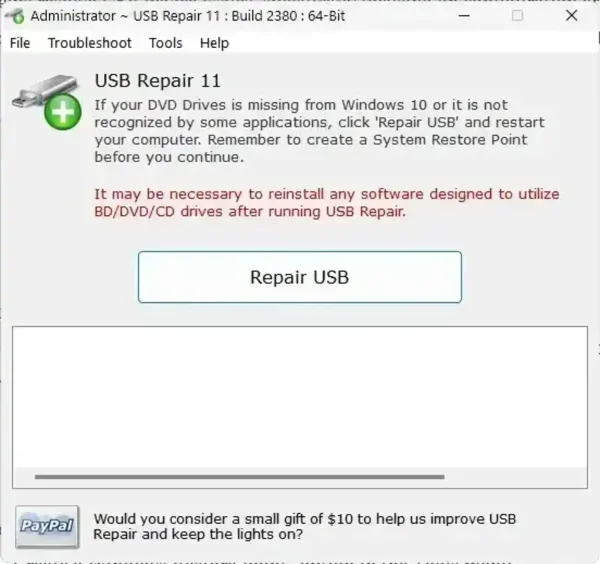
USB Repair is a free portable tool to help you fix common USB device problems caused by Windows driver, registry and configuration errors. This is a small tool that targets certain error codes in Device Manager and attempts to repair them automatically, rather than reinstalling Windows or performing a full System Restore.
USB Repair resolves typical Windows USB issues such as "USB Device Not Recognized" errors, driver failures, missing devices, and warning codes from Device Manager.
USB Repair | Free Portable USB Troubleshooting Tool
This portable utility focuses on repairing software-level USB issues that commonly occur after failed driver installations, Windows updates, registry corruption, or improper device removal.
It is especially useful when USB flash drives, external hard drives, keyboards, mice, or other USB devices suddenly stop functioning even though the hardware itself is still operational.
What USB Repair Does
The application repairs USB related configuration problems stored within the Windows registry and driver stack. These problems often appear in Device Manager with warning icons and numeric error codes.
Unlike hardware repair tools, this utility is designed specifically to correct software and driver related USB issues.
Common USB Problems It Can Fix
- USB Device Not Recognized errors
- USB devices failing to initialize
- Missing or corrupted USB drivers
- Devices appearing with warning icons in Device Manager
- USB devices that stop working after Windows updates
- Driver configuration corruption caused by improper removal
Key Features
- Targeted Repairs: Fixes common USB related Device Manager error codes.
- Portable Utility: Runs without installation.
- Fast Operation: Applies repairs within seconds.
- Low System Impact: Focuses only on USB related configuration problems.
- Restore Point Support: Allows rollback before changes are applied.
Supported Device Manager Error Codes
- Code 19: Registry configuration information is incomplete or corrupted.
- Code 31: Windows cannot properly load required drivers.
- Code 32: The device driver has been disabled.
- Code 37: Windows failed to initialize the driver.
- Code 39: Drivers may be missing or corrupted.
- Code 41: Windows detects the driver but cannot locate the device.
How These Errors Appear in Windows
These issues typically appear in Device Manager with a yellow warning icon beside the affected USB device. Symptoms may include failed driver loading, disconnected hardware messages, or devices that repeatedly connect and disconnect.
Fixing the "USB Device Not Recognized" Error
The "USB Device Not Recognized" message is commonly caused by corrupted drivers, damaged registry entries, or failed device initialization rather than physical hardware damage.
In many cases, this tool can restore functionality by repairing the underlying USB configuration problems that prevent Windows from properly detecting connected devices.
Why Use USB Repair?
This utility provides a faster alternative to full system recovery by targeting USB related registry and driver problems directly. It is particularly useful after failed driver installations, problematic Windows updates, or improper device removal.
How to Use USB Repair Safely
- Download and launch the application.
- Create a Windows Restore Point using the built-in option.
- Click the Repair USB button.
- Restart your computer after repairs complete.
- Reconnect your USB device and test functionality.
Tips and Precautions
- Create a restore point before applying repairs.
- Only use the tool when experiencing USB related issues.
- If problems continue, the issue may be hardware related.
- Try testing the device on another computer when possible.
- Update chipset and USB drivers if needed.
Quick USB Troubleshooting Checklist
- Reconnect the Device: Try another USB port.
- Check the Cable: Faulty USB cables are common causes of connection failures.
- Restart Windows: Rebooting may clear temporary driver conflicts.
- Open Device Manager: Look for warning icons and error codes.
- Test on Another Computer: Helps determine whether the issue is hardware or software related.
- Update Drivers: Install the latest drivers from Windows Update or the device manufacturer.
Specifications | Official Site | Download
- Author Website:Official Project Page
- Developer: Rizonesoft
- License: Freeware
- Extracted Size: Approximately 92 KB
- Platform: Windows
- Supported Operating Systems: Windows 7, 8, 10, 11
- Category: System Utilities, USB Tools
- Portable Version: Yes
- Rating: 4 Star
- Download: USB Repair Portable Download
Pros and Cons
Pros
- Small and lightweight
- Simple interface
- Can resolve common USB driver issues quickly
- Portable standalone version available
Cons
- Cannot repair physically damaged hardware
- May still require driver updates in some cases
Frequently Asked Questions (FAQ)
Can this tool fix USB devices that are not detected?
It can resolve many software and driver related USB detection issues. However, physically damaged devices or failed USB ports cannot be repaired by software.
Does USB Repair install or remove drivers?
No. The tool repairs USB related configuration and registry problems but does not directly install drivers.
Can I use this utility on Windows 11?
Yes. It supports Windows 7 through Windows 11.
Will this tool delete files from my USB device?
No. The application only repairs Windows USB configuration settings and does not modify personal files.
Final Thoughts
The USB Repair Tool is a useful troubleshooting utility for resolving Windows USB driver and configuration problems without resorting to full operating system recovery.
Its lightweight portable design makes it a practical addition to any USB troubleshooting toolkit, especially for repairing common Device Manager and USB detection errors.
For advanced USB troubleshooting and device history inspection, you may also want to use tools like USBDeview or registry cleanup utilities such as USB Oblivion.