RetroArch is a free and open source game emulation platform that provides a unified way to play games from many classic gaming systems on modern computers and devices. Rather than being a single console emulator, it functions as a frontend for the Libretro framework, allowing different emulator and game-engine cores to be used from one consistent interface.
The software supports a wide range of platforms and can be used on Windows, Linux, macOS, Android, iOS, and other supported systems. It also offers features such as save states, shaders, controller configuration, rewinding, screenshots, recording, and network play for compatible cores and games.
RetroArch | Portable Multi-System Game Emulator
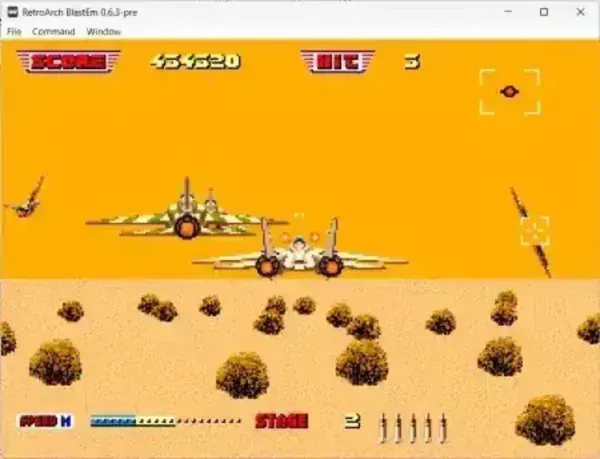
What Is RetroArch?
RetroArch is a frontend for the Libretro API that brings multiple emulation cores and game engines together under one application. Instead of installing and learning a separate emulator for every supported console, users can manage compatible systems through the same interface.
This architecture also makes the program highly configurable. Users can select different cores, customize video output, configure controllers, create save states, apply shaders, and adjust other settings on a per-system or per-game basis.
The result is an all-in-one environment for playing and preserving games from older consoles, handheld systems, arcade platforms, and other supported hardware.
How the Libretro Core System Works
One of the most important things to understand is that the application itself does not directly emulate every console. Instead, it uses individual Libretro cores.
A core contains the emulation or game-engine functionality required to run a particular system. For example, one core may provide NES emulation while another provides PlayStation or Game Boy Advance support.
This approach has several advantages:
- Multiple systems can be managed from one application.
- Different cores can sometimes be available for the same platform.
- Controller and video settings can be managed through a common interface.
- Save states, shaders, and other frontend features can be used across supported cores.
- Users can add additional functionality without installing an entirely separate emulator application.
Key Features
- Multi-System Emulation: Run compatible games from numerous classic consoles, handheld systems, arcade platforms, and computers using supported cores.
- Libretro Core Architecture: Choose from a large collection of emulator and game-engine cores through a unified frontend.
- Save States: Save and restore gameplay at convenient points rather than relying exclusively on the original game's save system.
- Rewind: Supported cores can allow gameplay to be rewound, making it possible to recover from mistakes without restarting from an earlier save.
- Shaders and Video Filters: Apply CRT effects, scaling filters, and other graphical processing options to change the appearance of older games.
- Controller Support: Configure keyboards, gamepads, and other compatible input devices through the centralized input system.
- Netplay: Supports network multiplayer for compatible games and cores.
- Cheat Support: Provides tools for loading and managing cheats where supported.
- Screenshots and Recording: Capture gameplay and use supported recording features without relying entirely on separate software.
- Playlists: Organize games and launch compatible titles from centralized playlists.
- Cross-Platform: Available across a wide variety of desktop, mobile, and other supported platforms.
- Open Source: Built around open source software and the Libretro ecosystem.
Supported Gaming Systems
The available platforms depend on which cores are installed. Supported systems include a broad selection of classic consoles, handhelds, arcade platforms, and computers.
Examples include:
- Nintendo Entertainment System (NES)
- Super Nintendo Entertainment System (SNES)
- Sega Genesis / Mega Drive
- Game Boy
- Game Boy Color
- Game Boy Advance
- Nintendo 64
- PlayStation
- Arcade systems
- And many other systems supported by available Libretro cores
The exact selection of available cores varies according to the operating system and current project support.
Using RetroArch from a USB Drive
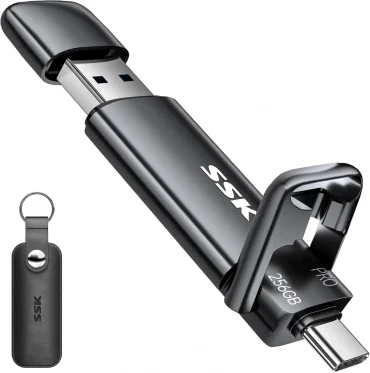
One of the reasons this software fits well into a portable gaming toolkit is that it can be configured for portable use. A suitable installation can be stored on a USB flash drive or external storage along with compatible cores, configuration files, playlists, saves, and other data.
A basic portable setup involves:
- Download the version appropriate for your Windows computer.
- Extract or install the application to a folder on your USB drive.
- Configure the application for portable data storage if necessary.
- Install the emulator cores you need.
- Connect a compatible controller and configure its inputs.
- Add your legally obtained game files.
- Create playlists or launch games directly through the frontend.
Keeping the application and its configuration files together can make it possible to carry your retro gaming environment between compatible computers.
USB storage performance can also affect loading times, particularly when using a large collection of games, thumbnails, playlists, and other assets.
RetroArch vs MAME
RetroArch and MAME can both be used for classic gaming, but their goals are somewhat different.
MAME is primarily focused on emulating and preserving arcade hardware, while the Libretro ecosystem provides cores covering many different types of systems.
| Feature | RetroArch | MAME |
|---|---|---|
| Primary Purpose | Unified frontend for multiple emulation cores | Arcade hardware emulation and preservation |
| System Coverage | Consoles, handhelds, arcade systems, computers, and more | Primarily arcade systems and related hardware |
| Architecture | Libretro frontend and cores | Integrated MAME emulation framework |
| Shaders | Extensive shader and video filtering options | Video configuration and effects available |
| Save States | Supported by the frontend and compatible cores | Supported functionality varies by configuration and emulation target |
| Netplay | Available for compatible cores and games | Networking capabilities vary by version and configuration |
| Interface | Unified interface across supported cores | Focused primarily on arcade emulation |
| Best Suited For | Users wanting one interface for many classic systems | Users primarily interested in arcade preservation and emulation |
For someone interested in arcade preservation specifically, MAME remains a particularly important project. For users who want a single frontend capable of managing games from many different types of systems, the Libretro approach provides a broader scope.
Alternative Emulators
The best alternative depends on the system you want to emulate. Some standalone emulators concentrate on one particular console or family of systems and may offer a simpler setup for that platform.
- MAME - Primarily focused on arcade machine emulation and preservation.
- mGBA - A dedicated emulator for Game Boy Advance and related systems.
- VisualBoyAdvance - A standalone option for Game Boy family emulation.
Standalone emulators can sometimes be easier to configure when you only want to play games from one specific system. A multi-system frontend becomes more useful when you want to keep several platforms together.
Why Use RetroArch?
The biggest advantage of this approach is consolidation. Instead of maintaining a collection of unrelated emulator applications, users can manage many supported systems through one interface.
It also provides a large number of customization options. Video shaders can recreate the appearance of older displays, controllers can be mapped through a common configuration system, and save states and other features can make older games more convenient to play on modern hardware.
For experienced users, the extensive configuration options provide considerable flexibility. Beginners may find the interface and core system somewhat more complicated than a simple standalone emulator, but once the basic concepts are understood, the same workflow can be applied across many different systems.
Game Files and ROMs
RetroArch does not provide copyrighted commercial games with the software. Users need to supply compatible game files themselves.
The legality of downloading, copying, or distributing ROMs and disc images depends on the specific game, copyright status, jurisdiction, and circumstances under which the files were obtained.
For that reason, users should obtain game files through lawful means and follow the applicable copyright laws in their region.
Common Issues and Troubleshooting
Controller Not Detected
Connect the controller before launching the application when possible, then check the input configuration. Some controllers may require manual button mapping.
Missing Emulator Core
A newly installed copy may not contain every core you want to use. The available core management tools can be used to locate and install compatible cores.
Games Are Running Slowly
Performance depends on the system being emulated, selected core, video settings, shaders, resolution, and computer hardware. Try disabling demanding shaders or reducing graphical settings if a game is not running smoothly.
Game Will Not Load
Check that the selected core supports the game system and that the game file is compatible with that core. Some systems also require additional BIOS files.
Portable Configuration Is Not Being Saved
Check the application's storage and configuration paths and make sure the USB drive is writable. Running from a location with restricted permissions can also interfere with configuration changes.
Specifications | Official Site | Download
- Application: RetroArch
- Category: Game Emulator / Retro Gaming
- Architecture: Libretro frontend and emulator cores
- License: Open Source
- Supported Platforms: Windows, Linux, macOS, Android, iOS, and other supported platforms
- Game Systems: Varies according to installed cores
- Portable Use: Supported when configured appropriately
- Official Website: RetroArch Project Page
- Download: Download RetroArch
Frequently Asked Questions
Is RetroArch an emulator?
RetroArch is primarily a frontend that uses Libretro cores to provide emulation and other gaming functionality. The individual cores provide the emulation or game-engine capabilities.
Is RetroArch portable?
Yes. It can be configured for portable use, allowing the application and its associated data to be stored on removable storage such as a USB flash drive.
Does RetroArch include games?
No. The software does not provide copyrighted commercial games. Users must supply compatible game files themselves and should obtain them through lawful means.
Is RetroArch free?
Yes. RetroArch is free and open source software.
What consoles does RetroArch support?
Support varies according to the available Libretro cores. Systems include classic Nintendo, Sega, Sony, handheld, arcade, and other platforms.
Can I use a USB controller?
Yes. Compatible USB gamepads and other input devices can be configured through the input settings.
Can I save my game progress?
Yes. Compatible games can use normal in-game saves, while the frontend and supported cores also provide save-state functionality.
Can RetroArch play arcade games?
Yes. Several arcade-focused cores are available, although the exact systems and compatibility depend on the selected core.
Final Thoughts
RetroArch provides a convenient way to bring a large collection of classic gaming systems together under one interface. Its Libretro core architecture means users can add support for different platforms without maintaining a completely separate frontend for every emulator.
The combination of multi-system support, controller configuration, save states, shaders, rewinding, playlists, and other features makes it considerably more than a basic console emulator. It can also be configured for portable use, making it a natural fit for a USB-based retro gaming collection.
There is a learning curve, particularly for users who are unfamiliar with emulator cores, BIOS files, playlists, and the application's many configuration options. However, that complexity also provides considerable flexibility once everything is configured.
For anyone building a portable collection of classic games and emulation tools, RetroArch is a versatile open source platform worth considering. Users primarily interested in arcade preservation may also want to explore MAME, while those focused on a particular console may prefer a dedicated standalone emulator.